
From Beginner to Advanced Learner: Creating a Learning Path Through an Online Ayurveda Course
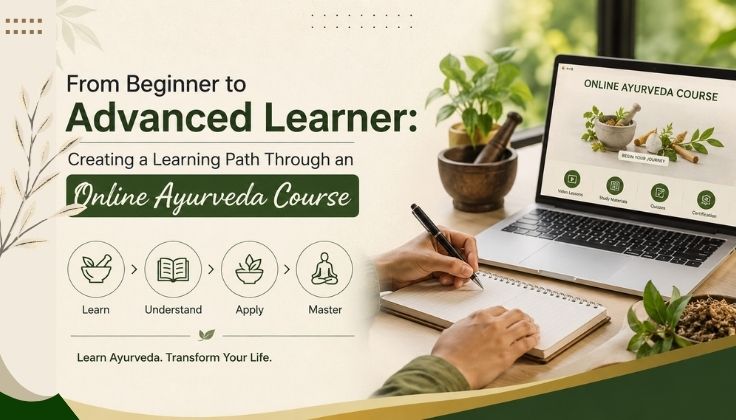
Learning Ayurveda can feel overwhelming when you are starting from scratch. There are traditional concepts, terminology, herbs, therapies, and a vast body of knowledge to explore. An Online Ayurveda Course can make this journey easier by giving learners a structured path from foundational concepts to advanced subjects.
The key is not to learn everything at once. A strong learning journey begins with basics, develops understanding, introduces application, and gradually moves towards specialised areas. For learners exploring Ayurveda Courses in Kerala, this approach can also create a meaningful connection with Kerala’s Ayurveda learning tradition.
Why Is a Structured Ayurveda Learning Path Important?
Ayurveda is a comprehensive system of knowledge, with many concepts connected to one another. Understanding the fundamentals makes it easier to approach complex subjects later.
For example, Tridosha, Prakriti and Agni form part of a broader framework for understanding the Ayurvedic approach to health and wellbeing. Without a strong foundation, advanced subjects can become difficult to follow.
A simple learning progression is:
Foundation → Understanding → Application → Specialisation → Advanced Learning
This helps learners build knowledge gradually instead of memorising disconnected information.
Step 1: Start With the Fundamentals
Every Ayurveda learning journey should begin with its foundational principles. Beginners can first explore the history, philosophy and basic concepts of Ayurveda.
Important areas include:
- History and fundamental principles
- Tridosha and the three Doshas
- Prakriti and individual constitution
- Panchamahabhuta
- Dhatu and Mala
- Agni and digestion
- Basic concepts of health and disease
- Dinacharya and Ritucharya
- Introduction to classical Ayurvedic texts
At this stage, focus on understanding rather than memorising. Try to see how concepts connect. For example, instead of simply remembering each Dosha’s characteristics, understand how they relate to individual constitution and balance.
Step 2: Build Knowledge of the Human Body
After learning the fundamentals, move towards understanding the human body through Ayurvedic concepts alongside relevant anatomy and physiology.
This stage helps learners connect traditional principles with the body's structure and functions. Simple concept maps and regular revision can strengthen understanding.
Step 3: Explore Nutrition and Lifestyle
Ayurveda places significant emphasis on food, digestion, daily routines and seasonal living. Once the basic principles are clear, learners can explore how these ideas relate to everyday life.
Topics may include:
- Ayurvedic dietary principles
- Food qualities and tastes
- Digestion and Agni
- Daily and seasonal routines
- Sleep and lifestyle
- Individualised approaches to wellbeing
This stage makes learning practical and relatable, helping students connect theory with daily habits.
Step 4: Move Towards Herbs and Therapies
With a stronger foundation, learners can gradually explore specialised subjects such as medicinal plants, Dravyaguna, Ayurvedic formulations and therapeutic practices.
Depending on the programme, these subjects may include:
- Medicinal herbs and their properties
- Ayurvedic pharmacology
- Traditional formulations
- Panchakarma
- Ayurvedic therapies
- Preventive practices
Demonstrations, case discussions and supervised sessions help connect theory with application.
Advanced therapeutic subjects also require appropriate education and supervision. Online learning can provide theoretical knowledge, while practical competence develops through suitable hands-on training.
Step 5: Choose an Area for Advanced Learning
As your knowledge develops, identify the areas you want to explore in greater depth.
Your advanced pathway could focus on Ayurvedic nutrition, herbs, Panchakarma, wellness, preventive approaches, traditional therapies or other specialised subjects offered by your programme.
Ask yourself: What do I want to achieve through my Ayurveda education?
Your answer can help determine which advanced modules are appropriate.
How Can You Learn Ayurveda Online Effectively?
Online learning provides flexibility, but flexibility works best with consistency. Create a weekly study schedule and divide lessons into manageable sessions.
After each lesson, write a short summary in your own words. Use flashcards for Sanskrit terminology and revisit difficult concepts. Participate actively in assignments, assessments and discussions to identify gaps.
A learning journal can also help you record questions and topics to revisit.
What Should You Look for in an Online Ayurveda Course?
Before enrolling, consider:
- Structured curriculum: Does it progress logically from beginner to advanced topics?
- Qualified educators: Do instructors have appropriate Ayurveda knowledge?
- Relevant syllabus: Does the course match your goals?
- Practical exposure: Are demonstrations or practical sessions included?
- Assessment: Are there ways to measure your progress?
- Flexibility: Can you balance the course with other responsibilities?
- Progression: Are further learning opportunities available?
A Simple Beginner-to-Advanced Ayurveda Roadmap
Beginner: History, philosophy and fundamental principles.
Foundation: Doshas, Prakriti, Agni, Dhatu, Mala, nutrition and lifestyle.
Intermediate: Anatomy, physiology, herbs, formulations and therapeutic concepts.
Advanced: Specialised subjects, deeper study and appropriate practical application.
Continuing learner: Revision, advanced education, practical exposure and lifelong learning.
Consistent learning makes the journey meaningful.
Learning Ayurveda is a gradual process. Start with the fundamentals, build conceptual understanding, explore nutrition and lifestyle, and then progress towards herbs, therapies and specialised subjects.
A well-designed Online Ayurveda Course such as School of Ayurveda can provide the structure and flexibility needed to follow this progression.
For learners interested in developing their knowledge within a strong Ayurveda tradition, exploring Ayurveda Courses in Kerala can also be a valuable option.
The goal is not to rush from beginner to advanced learner. It is to build knowledge one step at a time, strengthen understanding through revision and application, and continue learning as your interests develop.