
Ayurveda College for International Students: How Traditional Learning Meets Modern Wellness Education
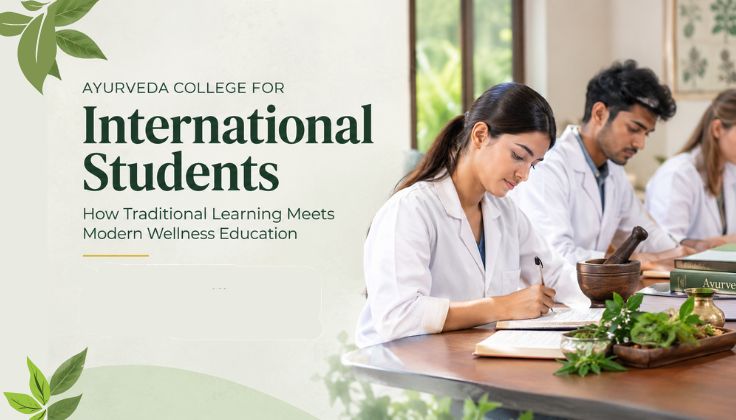
For international students interested in holistic health, studying Ayurveda in its traditional setting can offer more than classroom knowledge.
An Ayurveda College in Kerala can introduce learners to classical principles while giving them practical exposure to therapies, wellness routines, herbs, and patient care. It combines traditional wisdom with structured learning.
Why Do International Students Choose Kerala to Study Ayurveda?
Kerala has a long-standing association with Ayurveda and is widely recognised for preserving traditional Ayurvedic practices. International students can experience these practices within their traditional setting.
Authenticity alone is not enough for a meaningful educational experience. International students also need clear course structures, accessible teaching, practical training, experienced instructors, and learning resources. Modern education can make traditional knowledge easier to understand and apply.
What Does Traditional Ayurveda Learning Involve?
Traditional Ayurveda education is built around understanding the relationship between the body, mind, lifestyle, environment, and individual constitution. Depending on the programme, learners may explore Ayurvedic fundamentals, Panchakarma, massage techniques, herbal knowledge, nutrition, yoga, meditation, and other wellness practices. Practical sessions show how concepts become procedures.
At the School of Ayurveda and Panchakarma, practical learning forms an important part of training. Students can learn therapies from experienced teachers, observe patients in Ayurvedic hospital settings, participate in nature and field visits, and attend workshops related to traditional oil preparation. These experiences can make lessons more tangible than theory alone.
How Does Modern Education Enhance Traditional Knowledge?
Modern wellness education does not have to replace traditional learning. Instead, it can provide a framework that helps students understand, organise, practise, and communicate what they learn.
A structured classroom can introduce concepts progressively, while multimedia presentations, visual aids, simplified notes, diagrams, and updated study materials can support different learning styles. A library with books, research papers, and reference materials supports deeper study.
This balance helps international students encountering unfamiliar concepts. Clear explanations and guided practical sessions can make the transition easier without removing the traditional character of the subject.
What Can International Students Learn Through Practical Training?
Studying Ayurveda in Kerala connects classroom lessons with practical observation.
Students can learn about therapies in theory and observe their preparation or demonstration under supervision. Practical exposure can include massage techniques, Panchakarma procedures, herbal knowledge, pulse diagnosis, wellness routines, and traditional preparation methods, depending on the course.
For example, the School of Ayurveda and Panchakarma offers programmes ranging from Ayurvedic Massage and Panchakarma Therapy to Ayurvedic Beauty Therapy, Integrated Yoga Therapy, Ayurvedic Nutrition and Cooking, and a Diploma in Ayurveda and Panchakarma. Course duration varies, allowing learners to choose a suitable format.
Which Ayurveda Courses in Kerala Are Suitable for International Learners?
The right course depends on a student's background and purpose. Someone new to Ayurveda may prefer a foundation-oriented programme, while a wellness professional may want focused training in a specific therapy.
Shorter programmes offer concentrated exposure, while diploma-level programmes provide broader learning.
International learners can explore options such as:
- Ayurveda and Panchakarma training
- Ayurvedic massage and bodywork
- Ayurvedic beauty therapy
- Yoga and meditation
- Integrated Yoga Therapy
- Ayurvedic nutrition and cooking
- Pregnancy care and baby massage
- Distance learning programmes
Before enrolment, a course should clearly explain its duration, curriculum, practical components, teaching method, assessment, and certification. The School of Ayurveda and Panchakarma currently lists programmes ranging from short courses to a six-month distance learning programme and a 12-week diploma.
What Should International Students Look for in an Ayurveda College?
Choosing an institution requires more than comparing course titles. International students should consider whether the school provides a learning environment that combines authenticity with academic structure.
Look for:
- Experienced and qualified teachers
- A clear, well-organised curriculum
- Practical and hands-on training
- Access to suitable learning facilities
- Clinical or observational exposure where appropriate
- Study materials and reference resources
- Transparent information about certification
- Support for students from different backgrounds
The School of Ayurveda and Panchakarma states that its courses are accredited by the Scientific and Technical Education Development Council (STED) and that it has trained students from around the world for more than 25 years. Prospective students should still verify current recognition and whether a particular certificate meets professional requirements in their home country.
How Can Ayurveda Education Support Modern Wellness Careers?
The global wellness sector includes practices focused on lifestyle, preventive health, stress management, nutrition, movement, and personal wellbeing. Ayurveda education can give students a traditional framework through which to understand these areas.
Course completion does not automatically grant professional medical practice rights in every country. Students planning professional work should understand local licensing, registration, scope-of-practice, and employment requirements.
For wellness professionals, Ayurveda training can also complement existing knowledge. Yoga instructors, massage therapists, spa professionals, nutrition enthusiasts, and wellness practitioners may use suitable programmes to broaden their understanding, provided they remain within their professional scope.
What Makes Learning Ayurveda in Kerala Different?
The difference is not only the syllabus. It is the setting in which the learning takes place.
Studying Ayurveda in Kerala can allow international students to experience traditional food, medicinal plants, therapies, cultural practices, and wellness routines alongside formal education. Field visits and practical sessions can add context that is difficult to recreate in a purely online classroom.
This combination can help students understand Ayurveda as a complete knowledge system rather than a collection of isolated treatments. The experience encourages curiosity, observation, discipline, and respect for traditional practices.
Key Takeaways for International Students
Choosing an Ayurveda College in Kerala can be a meaningful step for students who want to study traditional wellness knowledge in an authentic setting. Programmes combine traditional principles with clear teaching and practical experience.
Before enrolling, compare the curriculum, course duration, practical training, teacher expertise, certification, facilities, and career relevance. Choose a programme that matches your experience and goals.
With the right balance of traditional learning and modern education, Ayurveda Courses in Kerala can offer international students a deeper understanding of holistic wellness while helping them build knowledge that remains relevant in today's changing wellness landscape.